

Email marketing metrics are the difference between guessing and growing — and for SMBs, that difference goes straight to the bottom line. An email list is a direct line to your customers. Unlike paid ads, you own the relationship, the frequency is yours, and you can measure every click and purchase. The trick? Knowing which numbers matter and how to use them to improve each campaign.
These are the core email marketing metrics that every campaign should track:
| Metric | What It Measures | Why It Matters |
|---|---|---|
| Open Rate | % of recipients who open the email | Shows subject‑line effectiveness & deliverability |
| Click‑Through Rate (CTR) | % of recipients who click a link | Indicates content relevance & call‑to‑action strength |
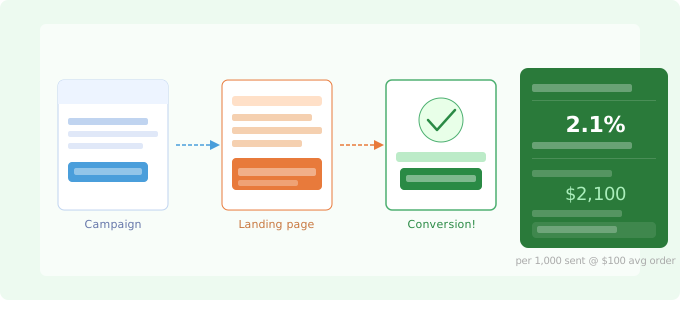
| Conversion Rate | % of recipients who complete the goal (purchase, sign‑up, download) | Directly tied to revenue or lead count |
| Bounce Rate | % of emails that didn’t reach the inbox | Signals list hygiene & deliverability |
| Unsubscribe Rate | % of recipients who opt‑out | Helps gauge content fatigue or relevance |
Quick‑Check: Most email platforms (Mailchimp, Klaviyo, ActiveCampaign) report these automatically in the campaign summary.
| Tool | What It Provides | How to Start |
|---|---|---|
| Mailchimp (Free Trial) | Full metrics, A/B testing, basic segmentation | Sign up, create a test list, launch a campaign |
| Brevo (Free Tier) | (formerly SendInBlue) Open/CTR/Conversion, SMS integration | Create a free account, import contacts |
| Google Sheets | Custom dashboard, calculations | Use =QUERY(), =VLOOKUP(), or the template below |
| Ubersuggest | Keyword insights for subject lines | Not a metric tool, but helps improve open rates |
Pro tip: If you’re on Shopify, the built‑in email tool gives you the same metrics with an even easier interface.
Turning email marketing metrics into action is where most most SMB owners tend to get lost . . .



=C2/B2=D2/C2=E2/C2=G2/B2=H2/B2Tip: Use conditional formatting (green = good, red = bad) to spot outliers instantly.